July 7, 2026
Fund Manager Spotlight: E14 Fund
Q&A with Calvin Chin, Co-Founder & Managing Partner
General Partner
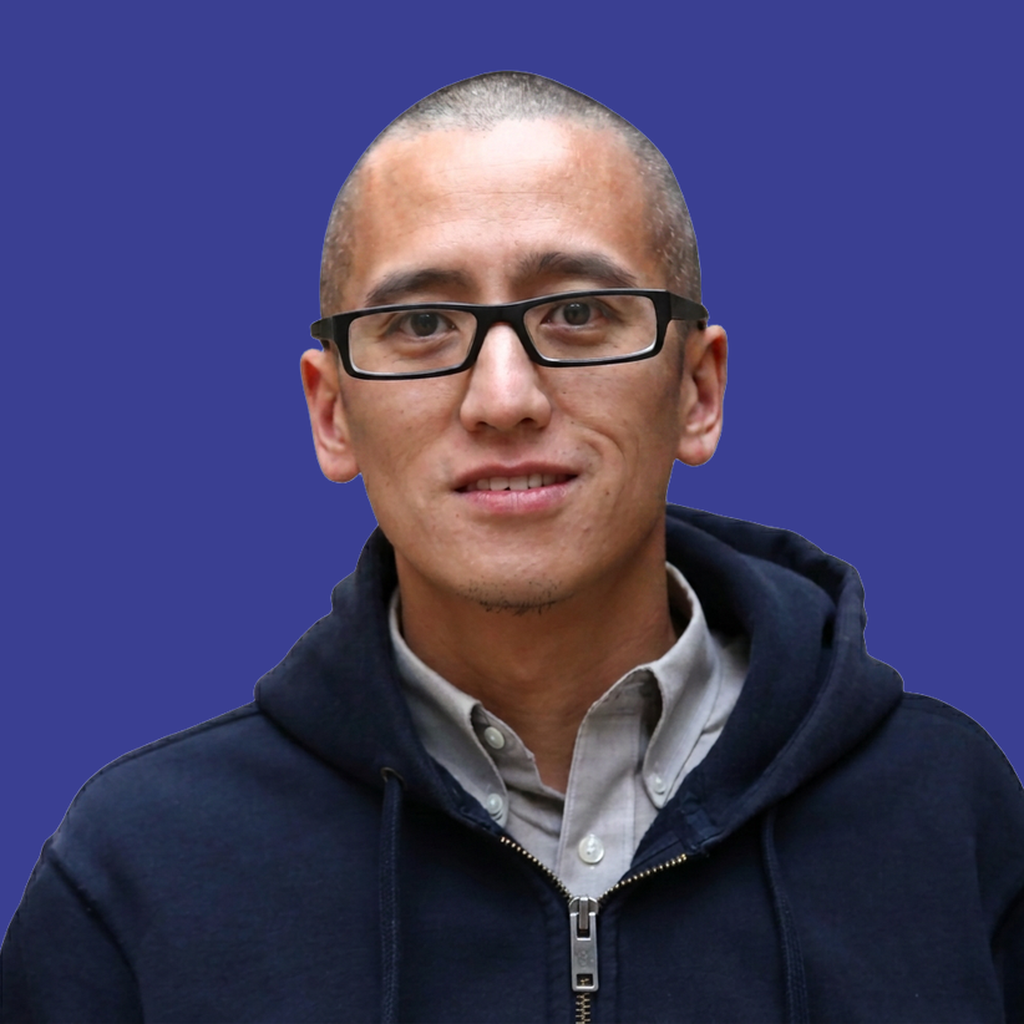
Calvin Chin is Co-Founder and Managing Partner of E14 Fund, an MIT-affiliated venture firm backing AI and deep tech founders from MIT and beyond. Rohati General Partner Nick Talwar has known Calvin and his fellow co-founder Habib Haddad for nearly 15 years, first through the World Economic Forum's Young Global Leaders program; Nick and Calvin are also fellow Aspen Institute fellows. Nick has personally invested in E14 since its formation, and over the years, their families have grown close, in and out of each other's homes.
E14 sources deeply technical founders straight out of MIT, where it's embedded in the school's Media Lab, and invests at the earliest stages. The team gives us an early look at the companies it believes could become breakouts, and the opportunity to invest in them in later rounds. As E14 enters Fund 4 with all three prior funds ranking in the top decile, we have more conviction than ever in Habib and Calvin's model and the community they have built.
We spoke with Calvin to share more with you about E14 and what he's learned along the way.
How did the two of you meet, and what led you to start E14?
Chin: It feels like Habib and I have always known each other, but we first met through the World Economic Forum, in a really vibrant and diverse community within it called the Young Global Leaders. We hit it off because we were both founders and company builders with a strong point of view on community. Habib had built companies including an MIT spin-out in Boston and another across the MENA region, and I'd built mine in the U.S. and China, all places where founders were carving out new startup communities. For years, we'd visit each other, meet and advise companies, and hang out.
Habib had been part of the MIT startup scene for many years, so MIT was one of the places I'd see him. Back in 2013, he helped put together our prototype fund, Fund 0, which proved the concept for E14. Working with folks at the MIT Media Lab, the fund was an experiment to see how we could help translate more research into impact and support people at the inflection point of graduating from MIT.
What makes E14's model and access different from other early-stage funds?
Chin: Fund 0 made it obvious to both of us that something exciting was possible, but the cool thing is E14 didn't start with us pitching MIT on a fund. It evolved organically from the community, and scaling it up came as an invitation from MIT to brainstorm the most robust, impactful version. So we spun out E14 as an independent fund with a formal, legal relationship with the academic and research side of MIT, not the endowment. We deliberately chose not to pitch MITIMCo and instead raised all outside capital to avoid conflicts of interest and politics. Today, MIT is a Special Limited Partner, and everyone on our team is an affiliate of a home lab, the MIT Media Lab, which is our home base for collaborating across the whole campus, the alumni, and the rest of the MIT ecosystem, including corporates and other supporters.
This makes us fundamentally different from any other fund. Where others scout MIT for great companies, we're part of the community, teaching, mentoring, and coaching with an authentic, long-term view of what's best for the researchers and the research. We don't push people to drop out; we see the value of seeing the work through at MIT. That's also good for the fund: we get to know the people and the work while the science and technical risk get resolved, we introduce them to customers and collaborators, and we get them ready to scale the moment they launch, much faster than typical deep tech investors.
Our relationships and our work aren't limited to MIT's campus, though. Over the years, the people we met and supported at MIT have gone on to lead labs at other universities and frontier labs, start their own companies, or move into industry and big tech. Our MIT roots and track record also earn us trust with deeply technical founders who have no MIT connection at all, and since our model has no restrictions on investing beyond MIT, we've backed more and more great non-MIT teams.
Now that you are entering Fund 4, how has E14 performed across your earlier funds, and which breakout companies or outcomes are you proudest of?
Chin: We've built the fund up to an ideal size for our model and team, and we're excited about where all three sit: each is top decile, and, maybe more importantly, each has drivers with strong fundamentals that point to further markups and future liquidity. In Fund 1, Overjet, the leader in dental AI, is a good example; we invested at the pre-seed and helped bring on follow-on investors like General Catalyst, Insight Partners, and March Capital. In Fund 2, MosaicML was acquired by Databricks for about $1.3B after only about two years, and companies like Bonsai Robotics and Tessel are going strong. Fund 3 is compounding fastest of all: Eigen AI was acquired by Nebius, Eka Robotics is closing a great new financing, and Netpreme, AlterEgo, and Axiom have all raised or are about to.
Honestly, we're most proud of our founders and what they've accomplished, but a few breakouts are especially exciting because they show the model working. We knew Eka's founder, MIT Professor Pulkit Agrawal, two years before the company existed, catching up on the state of the industry and then brainstorming co-founders a year out, and we led his pre-seed before Andreessen Horowitz led the Series A. We met Netpreme's CEO, Zhizhen Zhong, in our class, and his company is now solving the biggest problem in AI infrastructure, the memory wall. Tairan Wang of Sangtera was another student from that same program. Others, like Avantos, Learning Machine, and Physion Labs, came from beyond campus, but even there, we had months or years to build the relationship, explore ideas and go-to-market, and help the founders before we ever invested.
After more than a decade of investing at the earliest stages, what have you learned along the way that most shapes how you invest today?
Chin: Our biggest lesson is that the scarce input has inverted. When we started, the Lean Startup was orthodoxy: core technology was cheap, customer insight was scarce, and advantage went to whoever iterated fastest. That era feels largely over. Today's most valuable companies are built around technology only a handful of teams in the world can build, and it's valuable precisely because it's hard. You can't lean-startup your way into a frontier model, a new chip architecture, or a robotic manipulation stack. The old warning was that if you build a hammer, everything looks like a nail. The biggest outcomes of this decade came, and will come, from founders who bring the hammer, ten years of compounding technical expertise, and let the nails arrive later.
Second, trust precedes any term sheet, and it compounds. The faculty member at a workshop today, or the student we see year after year at Pi Day, is the founder who starts a company 12 to 24 months from now, and by then we're already a known partner. So we treat the firm like a product: anything we catch ourselves repeating, we productize, launching programs, killing what doesn't work, and scaling what does. That launch-kill-scale discipline is our secret sauce.
There are plenty more, but the last one I'd sum up as patience and persistence. Investing in relationships for the long term, well beyond any single transaction, has made us a deep part of the MIT community and the broader world of technical founders everywhere. Our commitment to constantly improving the model through learning loops, where we iterate, leverage, and repeat, has gotten us to a place of real "Fund Market Fit." As exciting as Fund 3's early results are, Fund 4 is off to an incredible start, too!
Enjoyed this piece? We’d love to hear from you.
admin@rohati.capital