
March 24, 2026
Fund Manager Spotlight: Activate
Q&A with Aakrit Vaish, Founder & General Partner
General Partner
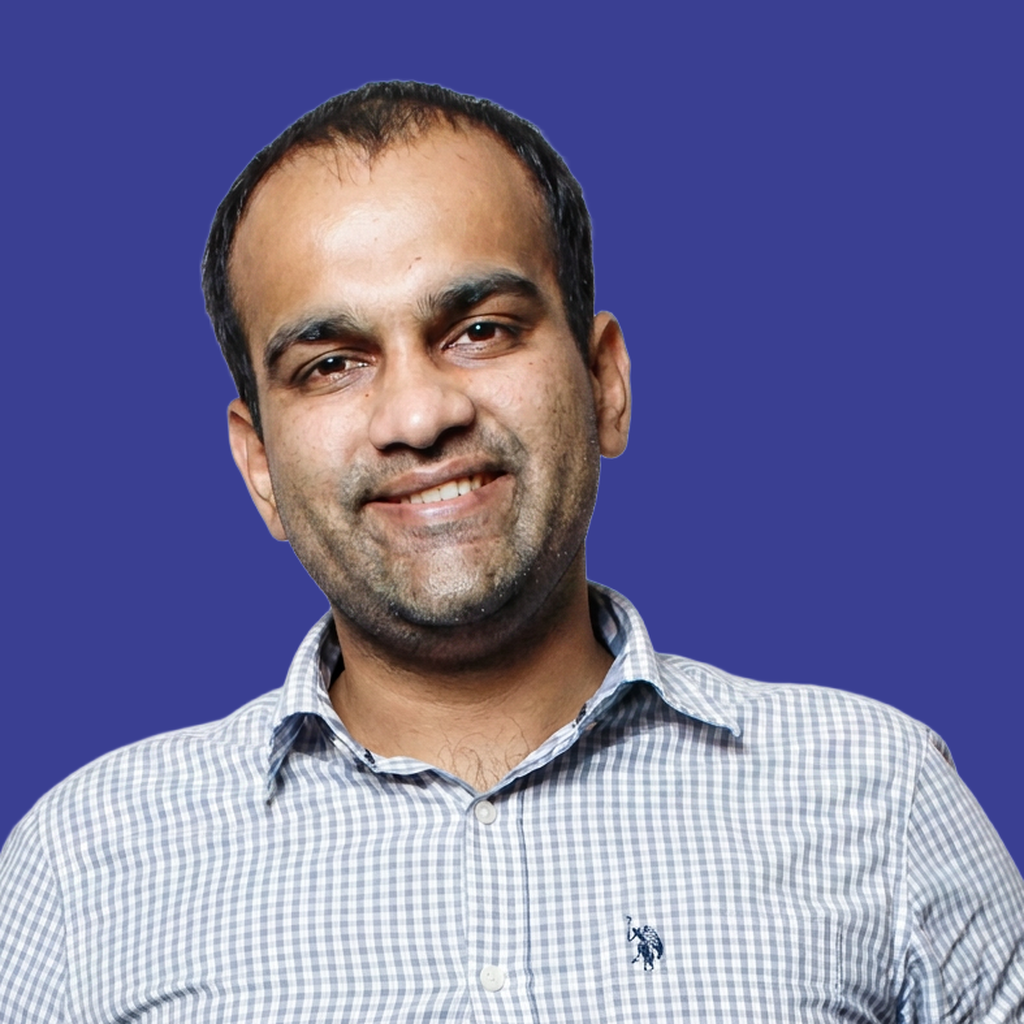
Aakrit Vaish is Founder and General Partner of Activate, a venture capital firm investing in India's emerging AI ecosystem. He previously founded the chatbot company Haptik and advised India's National AI Mission. Rohati General Partner Nick Talwar met Aakrit through the World Economic Forum's Young Global Leaders program. They have remained close, spending time in each other's homes with their families and collaborating on early ideas for Rohati and Activate.
Activate recently announced a multi-year collaboration with NVIDIA at the AI Impact Summit in New Delhi, marking a first for an India-focused VC fund. The summit drew over 35,000 registrants from more than 100 countries and featured prominent speakers, including Sundar Pichai of Google, Sam Altman of OpenAI, and more than a dozen heads of government. The sheer volume of participation reflects India's emerging importance as a critical testing ground for the global deployment of AI applications.
We deeply believe in Aakrit's understanding of the Indian market and the country's unique challenges and opportunities in AI. We also believe in his and his partner's ability to be a force in making something special happen in this market. We sat down for a conversation with Aakrit to share more about the fund.
How would you describe Activate?
Vaish: Activate is a new-age venture capital firm built on the belief that AI will have a bigger impact in India than anywhere else, and that India's builders will define how AI is applied globally. Our mission is to invest in India's AI ecosystem across talent, research, and capital, enabling exceptional technical founders to build the future of the nation. We partner with teams before a company even exists, working closely to stress-test ideas and shape products. At inception, we write the first institutional check of $500K-$3M. Founders can tap into the expertise of our LP and advisor network spanning the India-US corridor, which includes leading AI researchers, unicorn founders, and experienced operators across domains. Beyond capital, Activate runs Asia's largest generative AI community with 15,000+ practitioners, and produces Signal, India's premier media platform showcasing the country's emerging voice in AI.
Why did you start Activate? Why are you uniquely positioned for this opportunity?
Vaish: I grew up in India and spent over a decade in the US for college and work in Silicon Valley. I moved back home to pursue the idea of building AI for a billion people. In 2014, I created Haptik, India's first chatbot assistant, and we were way too early to the market. After its acquisition by Reliance Jio, the original question stayed with me: what will it take to "activate" AI in this country? That led me to join the Indian government as an advisor to the National AI Mission. During that time, it became clear that India is at a genuine AI inflection point. We have exceptional young technical talent and unprecedented entrepreneurial energy. What's been missing is the ecosystem: native AI capital, a strong community, and a coherent narrative for India's role in global AI. Activate is the attempt to build that. It's the culmination of my life's mission.
Between building Haptik, operating inside Reliance, angel-investing in 100+ startups, and my time with the government, I've had the privilege of seeing India's AI journey from multiple vantage points. The fund's connection to Silicon Valley also allows us to bring a global network and perspective back to India. My partner, Pratyush Choudhury, was a Founder Development Executive (FDE) before the role became popular. He's also a "born-in-AI" investor, having backed several of India's leading AI startups. Our biggest edge is our ability to deeply engage with technical AI founders on models, infrastructure, and product. That level of understanding is still rare in the Indian venture ecosystem.
How will AI for India differ from other markets? Isn't India behind the US market? How can it differentiate itself or catch up?
Vaish: India is behind the US in frontier research, compute concentration, and capital intensity, but those are only one dimension of AI. The opportunity for India lies elsewhere. India's strength is in applied AI: building products and services at massive scale, under real-world constraints: cost, language diversity, distribution, and regulation. Much like China built defensible internet companies by optimizing for its domestic realities, India will build AI companies by solving problems that exist nowhere else at this scale.
We also believe the next wave of AI companies will not be won purely by who trains the largest models, but by who builds durable businesses around them. In categories such as vertical AI, AI-led services, sovereign infrastructure, and consumer AI, India's talent density, cost structure, and speed of iteration are structural advantages. Our goal is not to "catch up" to the US, but to build differently—by pairing world-class technical talent with uniquely Indian problem statements, and then scaling those solutions globally.
Do you have any examples of this India-native "applied AI" thesis in Activate?
Vaish: Two examples from our early portfolio illustrate this well. The first is Aqqrue, which is building the first AI-native KPO for outsourced accounting. 70-80% of US accounting work is offshored back to India, but it has historically been labor-intensive and services-driven. Aqqrue flips this model by using autonomous AI agents to deliver regulated accounting workflows, with humans increasingly in supervisory roles. This is part of our AI BPO 2.0 thesis, in which India uniquely combines deep domain expertise, global process familiarity, and technical FDE talent to deliver production-ready AI.
The second example is Drip Club, a consumer AI company building the default shopping OS for Indian men. India has over 100 million men entering the fashion economy digitally, yet penetration remains low due to trust gaps, taste validation, and discovery challenges. Drip uses AI to simplify decision-making through personalization, contextual discovery using generative media, and social validation. This aligns with Activate's thesis on consumer AI for the next billion people in India, designed around the country's distinct consumer behavior, price bands, cultural context, and logistics realities.
Enjoyed this piece? We’d love to hear from you.
admin@rohati.capital